



MuTopia learns topographic models of somatic mutation: it simultaneously decomposes a cohort's mutation counts into distinct processes (signatures) and explains how local genomic context shapes each signature's activity across the genome.
The MuTopia Atlas at mutopia.sigscape.org charts how mutational processes spread across the cancer genome. This site is for the package that produced it, so you can run the same analysis on your own tumors.

Signatures: which mutations
A mutational signature is a process's fingerprint: the mix of base changes it leaves behind, which identifies the kinds of mutation a tumor accumulated.
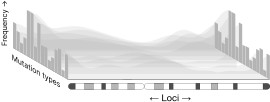
Topography: where they land
MuTopia adds where in the genome those mutations fall, across replication timing and chromatin. Those positions carry information about how the damage was repaired, not only what caused it.
A topotype is the recurring shape a process's genome-wide mutation rate takes, set mainly by replication timing and chromatin state. A pan-cancer analysis across 15 tumor types sorted mutational processes into eight of them. Explore them in the MuTopia Atlas:
docker pull allenlynch/mutopia:latestTopographical archetypes of somatic mutagenesis in cancer
Lynch AW, Lee SS, Hummel JP, Geiger B, Lawrence MS, Jin H, Gulhan DC, Park PJ (2026)
doi: 10.64898/2026.04.18.719374